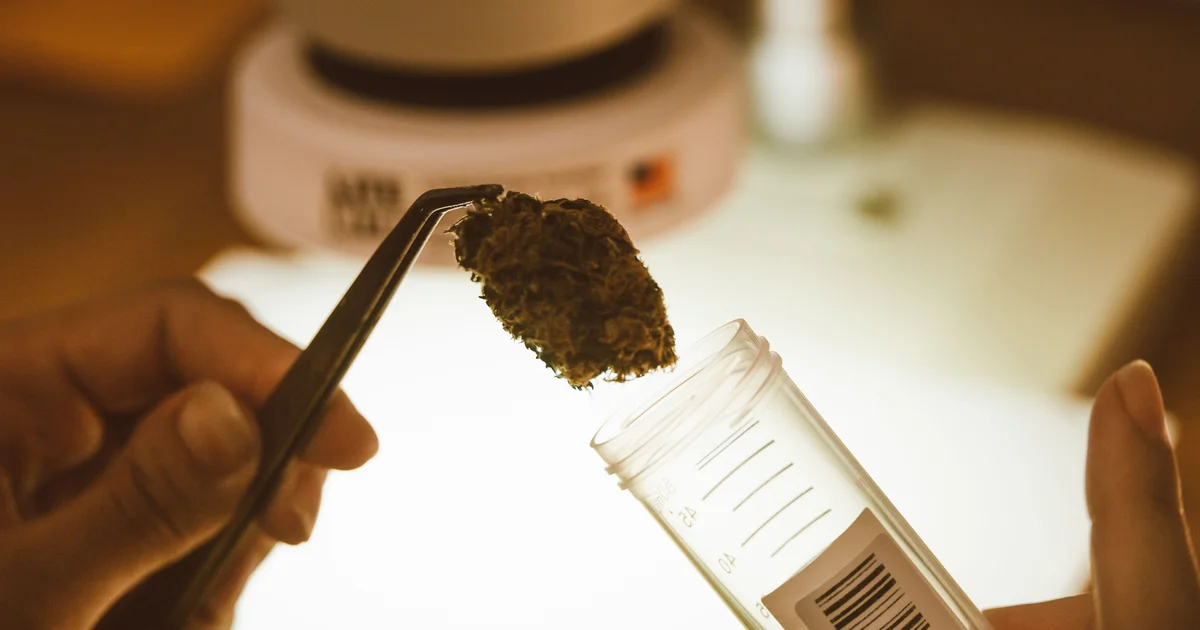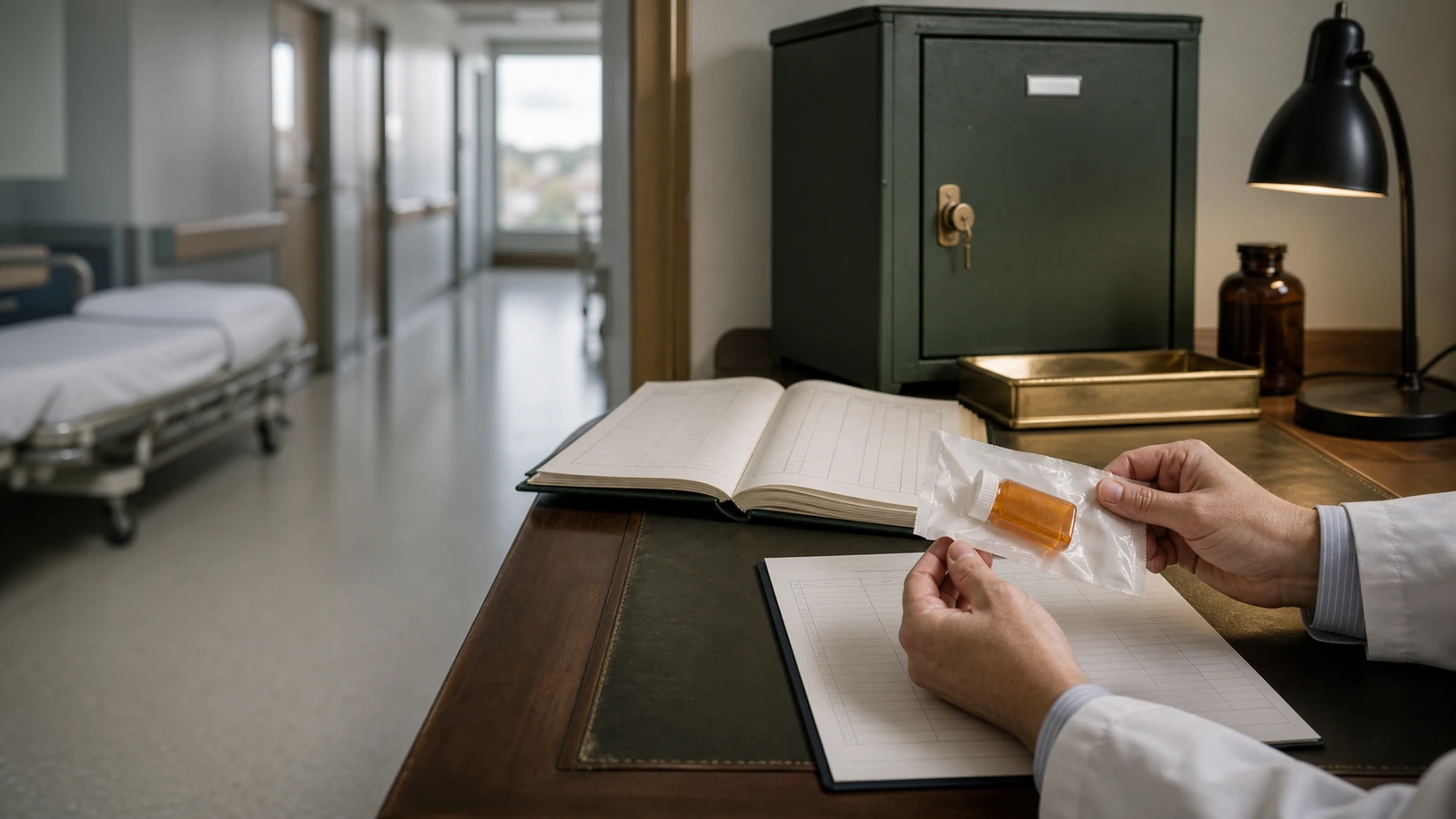
A hospital admission should not turn a lawful prescription into an argument about whether the medicine is real.
That sounds obvious. In practice, prescribed-cannabis patients can still encounter a system in which recognition, storage and administration depend heavily on the knowledge of the ward and the policy of the trust. A prescription that is managed through a formal medicines pathway in one hospital may trigger confusion in another.
Recent coverage of a procedure approved by Devon Partnership NHS Trust has brought that problem into view. The reported policy is welcome, particularly because it addresses continuity of treatment in mental-health inpatient settings. But the accompanying claim that it is the first NHS inpatient policy is less secure than the headline suggests. Royal Cornwall Hospitals NHS Trust has a detailed public guideline, valid from April 2025, covering privately prescribed cannabis-based medicinal products in all its inpatient areas.
The question is therefore not who was first. It is why patients still need individual trusts to rediscover the same principles.
The useful part of the Devon story
Patient advocacy group PatientsCann UK says Devon’s procedure, known as CD21, was approved by the trust’s Medicines Safety Committee in May 2026. Its account describes a pathway for checking prescriptions, storing products as controlled drugs, recording administration and deciding whether a patient can continue treatment during admission.
That is important work. Hospital staff need to know the difference between initiating a new treatment and safely continuing an existing prescription. They also need a process for products that may be unlicensed, privately prescribed and unfamiliar to the ward.
The reported procedure is especially notable because Devon Partnership is a mental-health, learning-disability and autism trust. In those settings, clinical questions about cognition, psychological symptoms, interactions and capacity to self-administer may require close review. A serious policy should make that review possible without treating the medicine as illicit by default.
There is, however, a transparency problem. The full CD21 document was no longer available from the PatientsCann download link when this article was prepared, and it was not readily discoverable in the trust’s public policy library. That does not invalidate the reported policy. It does mean that claims about its exact wording—and about national precedence—should be made carefully until the primary document is publicly accessible again.
Cornwall already has a public inpatient pathway
Royal Cornwall Hospitals’ 16-page clinical guideline is unusually clear. Version 4 was approved in March 2025 and came into force the following month. It covers cannabidiol products and cannabis-based medicinal products across all inpatient areas.
For a privately prescribed product used outside NICE recommendations, the guideline says the hospital may permit continued use where clinically appropriate. The patient must provide a recent clinical letter or prescription and present the medicine in its original container with a legible pharmacy label. The dispensing pharmacy is contacted to verify supply.
Once verified, the medicine is prescribed in hospital exactly as documented, reviewed by pharmacy and stored through controlled-drug procedures. Changes require direct review by the private clinic. Oral products and pastilles are accommodated; vaporised products may be used only outside hospital buildings under the trust’s fire-safety rules. Smoking remains prohibited. The hospital does not undertake to replace private supplies if they run out, and use is recorded in the discharge summary.
This is not a perfect national model. Requiring a prescription or clinical letter dated within 90 days could create difficulty during an emergency admission. Requiring vaporisation outdoors may be impractical for a patient who cannot safely leave the ward. The refusal to resupply privately prescribed products also leaves continuity dependent on the patient, family or clinic.
But the document proves an important point: an NHS trust can distinguish a verified prescription from an illicit product and manage it through ordinary medicines governance. It also makes a sweeping “first policy” claim difficult to sustain. Cornwall’s version history reaches back to an initial guideline issued in November 2018, although the explicit private-clinic pathway was added in 2025.
What national rules already say
The legal framework is not silent. Cannabis-based products for medicinal use were moved into Schedule 2 in November 2018. NHS England says there is no legal restriction on the conditions for which a specialist may prescribe, although the evidence base, licensing status and suitability of established treatments must shape the clinical decision.
NHS England also says prescribing should use the relevant trust governance procedures for unlicensed medicines in the normal way. Specialist oversight, multidisciplinary decision-making and controlled-drug accountability are not optional extras invented for cannabis. They are the mechanisms through which hospitals already manage complex medicines.
The national guidance further says clinicians working under a specialist’s direction may continue prescribing after a patient is established on treatment. Since April 2022, NHS England has operated a registry intended to capture relevant clinical interactions involving licensed and unlicensed cannabis-based medicines.
What these national arrangements do not provide is a consistent, patient-facing admission pathway for a privately prescribed product brought into hospital. That missing operational layer is where the postcode lottery begins.
Why admission creates friction
Hospital medicines reconciliation is designed to establish what a patient is taking, whether it should continue and how it can be supplied safely. Medical cannabis adds several practical complications, but none is conceptually unique.
The prescription may be private and digital. The product may be an unlicensed “special”. Flower may resemble illicit cannabis even when it is pharmacy dispensed. A ward may have no suitable place for vaporisation. Staff may be uncertain about storage, interactions, self-administration or who is responsible for contacting the outside prescriber.
Those are reasons for a protocol, not reasons to improvise.
Automatic continuation would be unsafe. A hospital team may have legitimate clinical reasons to pause or alter any medicine during acute illness, surgery or a mental-health admission. Automatic confiscation or unexplained omission is not the answer either. The correct question is whether the verified treatment remains appropriate for this patient in this setting—and, if not, how the decision will be explained and managed.
What a national minimum standard should contain
NHS England does not need to dictate every ward-level detail. It should set a minimum pathway that every trust adapts to its services.
That standard should cover:
- Recognition and verification: original pharmacy packaging, an up-to-date prescription or clinic letter, and a defined route for contacting the private prescriber or dispensing pharmacy.
- Timely medicines reconciliation: a target for pharmacy review and a process for recording and responding to omitted doses while verification is under way.
- Individual clinical review: interactions, current symptoms, capacity, route of administration and the specific risks of the admission—not an assumption based on the word cannabis.
- Storage and administration: controlled-drug records, patient-own-drug assessments, self-administration criteria and workable arrangements for non-smoking inhaled products.
- Supply and discharge: who arranges further private supply, how the outside clinic is involved and what appears in the discharge record.
- Escalation and accountability: a rapid route to pharmacy and the controlled-drugs accountable officer, a way for patients to challenge a decision, and audit data on refusals, missed doses and safety incidents.
The standard should also require a short patient-facing document. A policy hidden in a governance library is of limited use to somebody arriving at an emergency department with a labelled medicine and no idea what will happen next.
What patients can do now
Policies differ, so no checklist can guarantee continuation during admission. For a planned stay, contact the hospital pharmacy or pre-assessment team in advance and ask for its policy on privately prescribed cannabis-based medicines. Contact the prescribing clinic as well; request a current prescription copy and a clinical letter that includes a verification route.
Bring the medicine in its original, labelled pharmacy packaging. Do not decant it. Declare it during medicines reconciliation and ask who is responsible for the clinical decision, storage and administration plan.
During an emergency admission, the same documentation is useful if it is readily available, but clinical care comes first. A patient should not take a controlled medicine without the ward knowing. If treatment is stopped or delayed, ask for the reason, the responsible clinician and the plan to manage the interruption.
This is practical information, not a guarantee that a particular product or route will be continued. The hospital remains responsible for safe care during the admission.
The editorial view
Devon’s reported procedure deserves attention because it shows that a difficult-looking problem can be converted into a medicines pathway. Cornwall’s public guideline shows that this work is not unprecedented.
Neither should be exceptional.
Nearly eight years after the law changed, the NHS should not rely on individual pharmacists, advocates and trusts to build the same framework in isolation. National consistency would not force clinicians to continue every prescription. It would ensure that a lawful medicine receives verification, clinical judgment and a documented decision rather than stigma or guesswork.
The measure of progress is not whether another trust can claim a first. It is whether the next patient encounters a system that already knows what to do.
Key takeaways
- Devon Partnership NHS Trust reportedly approved an inpatient cannabis procedure in May 2026, but its full text was not publicly accessible when this article was prepared.
- Royal Cornwall Hospitals has a public guideline, valid from April 2025, that covers verified private cannabis prescriptions in all inpatient areas.
- Cornwall requires recent documentation, original labelled packaging, pharmacy verification, controlled-drug storage and an exact inpatient prescription.
- Existing national guidance supports normal unlicensed-medicine and controlled-drug governance but does not create a uniform admission pathway for private patients.
- A national minimum standard should cover verification, clinical review, missed doses, storage, administration, resupply, discharge and appeals.
- A prescription should not guarantee automatic continuation, but it should guarantee a competent and documented medicines review.
Sources
- Use of Cannabidiol and Cannabis-Based Medicinal Products Clinical Guideline V4.0 — Royal Cornwall Hospitals NHS Trust
- Cannabis-based products for medicinal use — NHS England
- Cannabis-based products for medicinal use: patient registry — NHS England
- Cannabis-based medicinal products: NICE guideline NG144 — NICE
- Devon Partnership NHS Trust inpatient policy account — PatientsCann UK
- NHS trust approves inpatient medical-cannabis procedure — Cannabis Health
- Clinical strategy 2025–28 — Devon Partnership NHS Trust