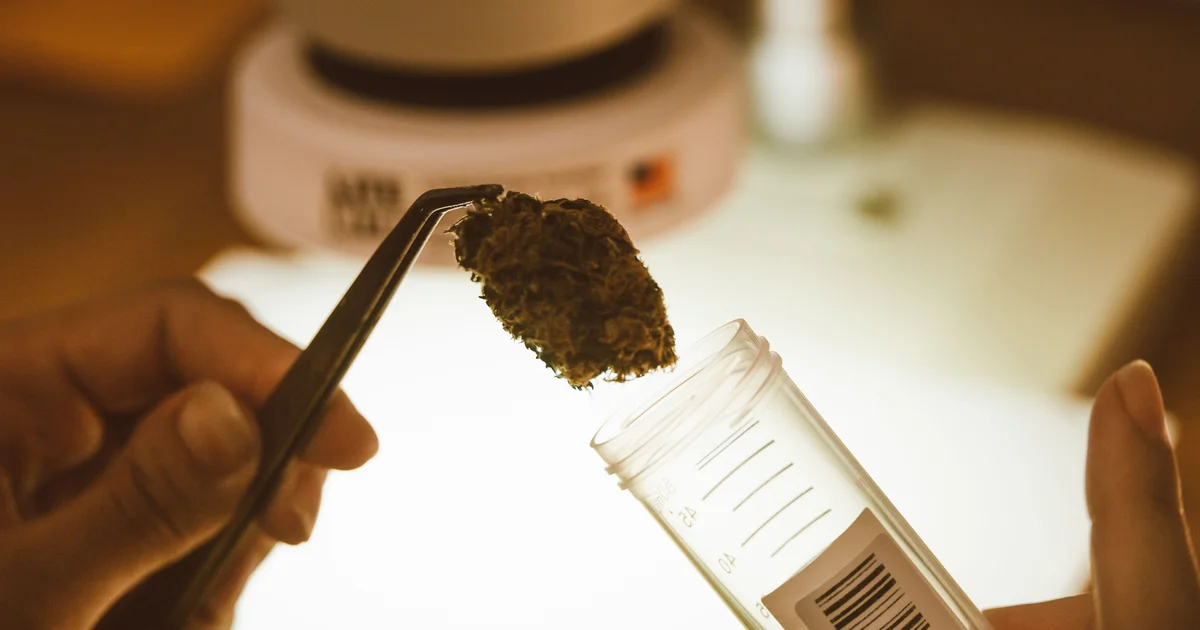
Medical cannabis has been available on prescription in the UK since 2018. Yet the law governing cannabis and driving was largely designed before legal prescribing became an established — if still limited — part of British healthcare.
That mismatch has created a difficult question for patients, clinicians and policymakers: how should the law protect road users without unfairly penalising people who take a prescribed medicine responsibly?
The current system combines an extremely low legal blood limit for THC with a statutory medical defence. In theory, that defence protects patients who have taken medicine as prescribed and are not impaired. In practice, however, patients can still face roadside testing, arrest, blood sampling and the burden of proving that their use was lawful.
The result is uncertainty around a medicine that may remain detectable long after its noticeable effects have worn off.
What is the current THC driving limit?
In England and Wales, the specified legal limit for delta-9-tetrahydrocannabinol, or THC, is 2 micrograms per litre of blood.
The Government introduced this threshold as part of a “zero tolerance” approach to drugs historically treated as illicit. It is far lower than the limits set for a number of medicines regulated using a risk-based approach.
A driver can commit an offence if the concentration of a specified controlled drug exceeds the legal limit. This is separate from the offence of driving while unfit through drugs, which focuses on actual impairment.
That distinction matters. A person may test above the THC threshold without displaying obvious signs of unsafe driving, particularly where THC has been used regularly as prescribed.
Does a prescription provide a defence?
Yes — but it is not a licence to drive while impaired.
Section 5A of the Road Traffic Act 1988 provides a medical defence where a specified controlled drug was prescribed or supplied lawfully and taken in accordance with medical advice.
The defence is not available when the patient has failed to follow that advice. It also does not protect anyone whose driving is impaired.
This means a medical cannabis patient should only drive when:
- the medicine has been legally prescribed;
- it has been taken in accordance with the prescriber’s instructions;
- the patient is not experiencing impairment;
- the patient has followed any warning not to drive after starting treatment or changing dose.
Patients may find it useful to carry evidence of their prescription, dispensing label or clinic documentation. This does not guarantee that police action will be avoided, but it may help establish lawful medical use.
Why is the law controversial for medical cannabis patients?
The central criticism is that blood concentration and impairment are not the same thing.
THC can be detected after the acute effects have diminished. The relationship between a particular blood level and driving ability is also affected by factors including dose, frequency of use, tolerance, route of administration and the time between treatment and testing.
This makes cannabis different from alcohol, where blood concentration has a more established relationship with impairment at population level.
The UK threshold was deliberately set very low. Government material describes the THC limit as part of an “accidental exposure” or zero-tolerance framework rather than a level intended to represent impairment.
For a patient taking a THC-containing medicine regularly, that creates the possibility of being over the specified limit even when they believe they are fit to drive.
What happens during a roadside stop?
Police may stop a driver and carry out a field impairment assessment if drug use is suspected. They may also use a roadside oral-fluid screening device for cannabis and cocaine.
A positive roadside screen is not the final evidential result. A driver may be arrested and required to provide a blood sample, which can then be analysed against the statutory limit.
Where lawful prescribing is raised, the circumstances of the prescription, the way the medicine was taken and evidence of impairment may all become relevant.
The Crown Prosecution Service confirms that when the medical defence is properly raised, it must be disproved beyond reasonable doubt for a conviction under the specified-limit offence.
However, going through an investigation can itself create significant stress, expense and disruption — even where the patient ultimately has a valid defence.
Why are doctors and patients calling for change?
The wider medical argument is that road-safety policy should be based on evidence of risk and impairment, not on stigma attached to a particular medicine.
The British Medical Association has called for stronger, evidence-led enforcement of drug-driving law and has highlighted weaknesses in the current testing and enforcement system.
Medical cannabis campaigners argue that reform should go further by addressing the specific position of prescribed THC. Their concerns commonly include:
- whether the 2 microgram limit remains scientifically appropriate for prescribed patients;
- whether impairment-based evidence should carry greater weight;
- whether police, clinicians and patients have sufficiently clear guidance;
- whether lawful patients are being exposed to unnecessary investigation;
- whether medical cannabis is being treated consistently with other prescribed controlled drugs.
A review would not have to weaken road safety. It could instead examine how to identify genuine impairment more accurately while preserving firm penalties for dangerous driving.
Would impairment-based testing solve the problem?
Not on its own.
Impairment testing sounds straightforward, but it presents practical and scientific challenges. Field assessments can be subjective, and cannabis may affect individuals differently.
Blood testing provides an objective number, but that number does not always provide a complete picture of driving ability.
A more balanced system could combine several types of evidence:
- observed driving behaviour;
- roadside impairment assessment;
- toxicology results;
- confirmation of a lawful prescription;
- adherence to medical advice;
- clinical and scientific evidence about impairment.
The goal should be neither automatic prosecution based solely on trace detection nor an automatic exemption for prescription holders.
The relevant question is whether the person was driving unsafely or had failed to use their medicine responsibly.
How does the UK compare internationally?
Cannabis-driving laws vary significantly.
Some jurisdictions use fixed THC limits. Others rely more heavily on evidence of impairment, and some combine per-se limits with medical exemptions or different enforcement thresholds.
Direct comparisons are difficult because legal systems, testing methods and medical-cannabis frameworks differ.
What is clear is that there is no universal scientific consensus that one low THC blood level can determine impairment in every driver.
That is why campaigners argue the UK should periodically review its framework as evidence, testing technology and prescribing practice develop.
What should patients do now?
Until the law changes, medical cannabis patients should assume that the existing drug-driving rules continue to apply.
Patients should:
- Follow the prescriber’s instructions exactly.
- Never drive when experiencing drowsiness, slowed reactions, dizziness, confusion or any other impairment.
- Avoid driving after starting treatment or changing dose until the effects are understood.
- Keep prescription and dispensing evidence accessible.
- Ask the prescribing clinician for clear driving advice.
- Remember that a prescription does not protect anyone who is unfit to drive.
- Seek independent legal advice if arrested or charged.
Clinic documentation or a patient card may help explain prescribed use, but neither replaces the statutory medical defence or guarantees that no investigation will occur.
What happens next?
The strongest case for review is not that medical cannabis patients should be exempt from road-safety law.
It is that the law should distinguish more effectively between responsible medical use and unsafe driving.
A modern review could examine the THC threshold, the operation of the medical defence, impairment testing, police guidance and the quality of information given to patients.
Public safety and patient rights do not have to be competing goals. A credible system should protect both.
Evidence should drive policy — not stigma.
Key takeaways
- The THC blood limit in England and Wales is 2 micrograms per litre.
- A lawful prescription can provide a statutory medical defence when medicine is taken as directed.
- The defence does not apply to driving while impaired.
- THC blood concentration does not always correspond neatly with current impairment.
- Patients may still face investigation before the medical defence is established.
- Reform advocates want clearer, more evidence-led rules rather than weaker road-safety protections.
Sources
- GOV.UK — Drugs and driving: the law
- GOV.UK — Drug-driving guidance and policy collection
- The Drug Driving (Specified Limits) (England and Wales) Regulations 2014
- Crown Prosecution Service — Road Traffic: Drink and Drug Driving
- Department for Transport — Medical cannabis and road safety
- British Medical Association — Evidence supporting its alcohol, drugs and driving policy