Archive restoration — 26 September 2026: This article has been restored from our original source files. Its publication date and reporting context remain unchanged; it is not a new update on current policy, availability or clinical guidance.
Jersey has succeeded in attracting licensed medical-cannabis cultivation. Its next question is more difficult: should the island also permit the medicine to be manufactured there?
An ITV News Channel investigation broadcast on 18 August showed the unusual gap in Jersey’s industry. Cannabis can be grown under licence on the island, but local producers say harvested material must still leave Jersey before it can be processed and packed as a medicine. The businesses interviewed want the Government to create a workable route to local manufacturing licences.[1]
Their frustration is understandable. Growing a pharmaceutical crop locally while exporting the higher-value stages of production is an incomplete industrial model. It adds transport, time and cost, and it prevents Jersey from capturing more of the skilled work associated with testing, formulation, packaging and quality assurance.
But a manufacturing licence is not simply another agricultural permission. It places a regulator between a medicine and the patient who will eventually use it. Jersey should close the gap only when it can do that job properly.
Cultivation and medicines manufacture are different jobs
The distinction can seem artificial from outside the industry. If a company is trusted to grow cannabis, why should it not be trusted to package the result?
Because cultivation oversight and pharmaceutical manufacturing answer different questions.
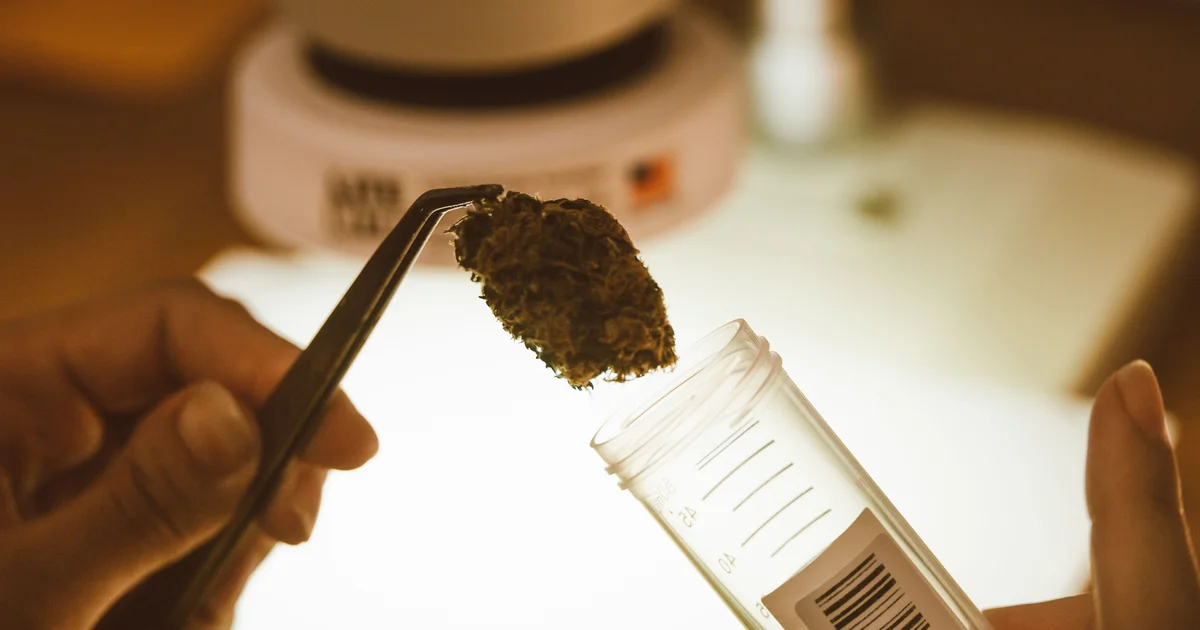
A cultivation regime is concerned with controlled-drug security, authorised genetics, record-keeping, storage, diversion and the conditions under which a crop is produced. Medicines regulation must also establish that every released batch is what its label says it is: consistent in strength, free from unacceptable contamination, stable for its stated shelf life and produced through a validated process.
That requires more than a clean room and good intentions. A competent authority needs inspectors with pharmaceutical expertise, enforceable quality standards, procedures for adverse events and defects, and the ability to stop manufacture or recall product when necessary.
Jersey’s current Medicines Law already recognises the principle. It says a person may not manufacture or assemble a medicinal product in the course of business without a manufacturer’s licence.[2] The unresolved issue is not whether a licence is legally required. It is whether the island has a sufficiently robust system to assess, issue and supervise one.
In the ITV report, the Government said its present arrangements for the licensing and oversight of controlled drugs and medicines manufacturing did not appear robust enough and that a full review was under way.[1] That is not an argument for indefinite delay. It is a candid description of the work still to be completed.
The economic opportunity is real
The businesses featured by ITV argued that local manufacturing could keep more value on the island. One estimated that packing its own product—and potentially offering the service to other producers—could generate around £500,000 a year. That figure is a company estimate, not an independently verified forecast, but the wider logic is sound.[1]
An industry built only around cultivation is exposed. Wholesale flower prices can change, crops can fail, and international buyers can switch suppliers. Manufacturing, laboratory work and release testing create different kinds of jobs and make a local supply chain less dependent on one stage of production.
Jersey also has a plausible base from which to build. It has experience in tightly regulated financial services, a compact administration and an established relationship with the UK. A well-run medicines function could support more than cannabis in the long term.
There is also an environmental argument for reducing unnecessary movement of controlled material. Exporting a crop for processing and then moving finished products through additional jurisdictions creates journeys, paperwork and points of failure. Local manufacture would not remove the need for import and export controls, but it could simplify part of the chain.
None of that means every proposed facility should receive a licence. It means Jersey should decide whether it wants a serious pharmaceutical-manufacturing sector and, if so, fund the regulator needed to supervise it.
Why the Government is right to be cautious
Medical cannabis has too often been discussed as though its botanical origin makes pharmaceutical controls excessive. The opposite is true.
Cannabis contains variable concentrations of active compounds. Products can be affected by moisture, microbes, pesticides, heavy metals and the conditions in which they are dried and stored. Small differences in concentration can matter, particularly for products containing THC. A batch that is mislabelled or poorly controlled is not an abstract compliance problem; it can change a patient’s dose and level of impairment.
Jersey’s public-health guidance describes most cannabis-based medicinal products as unlicensed medicines and notes that they may be prescribed only through an appropriate clinical route.[3] “Unlicensed” does not mean unregulated. It means the product does not hold a standard marketing authorisation for a named indication, so the responsibilities around manufacture, supply and prescribing become especially important.
In a 2025 response to the States Assembly, the Government confirmed that a manufacturer’s licence under Jersey’s medicines law would be required for such activity.[4] The answer did not create a ready-to-use pathway. It reinforced that pharmaceutical manufacture sits inside a different regulatory framework from cultivation.
The Health Minister’s first duty is therefore not to preserve an investor’s timetable. It is to protect patients. A regulator must be able to inspect without fear or favour, demand corrective action, trace every batch and act quickly when standards are not met.
Industry leaders interviewed by ITV appeared to accept that principle. They called not for the removal of oversight, but for a capable and accountable Jersey regulator.[1] That point should be the basis of the next phase.
What a credible local system would need
The cleanest solution is not a special light-touch cannabis permit. Jersey needs a medicines-manufacturing framework that would remain credible if applied to any controlled pharmaceutical product.
At minimum, that means:
- a clearly independent licensing authority with published responsibilities;
- inspectors trained in good manufacturing practice;
- rules covering premises, personnel, testing, documentation and batch release;
- transparent fees and realistic assessment times;
- coordination between health, customs, police and controlled-drug licensing teams;
- procedures for complaints, adverse events, product defects and recalls;
- public reporting that allows residents and the States Assembly to assess performance;
- agreements defining how Jersey-made products would be recognised and imported elsewhere.
The last point is easily overlooked. Permission to manufacture in Jersey would not automatically guarantee access to the UK or European market. Buyers and importing authorities would still need confidence in the island’s standards, certificates and inspections.
Jersey could build all of this itself, share expertise through a formal arrangement with an established regulator, or use a hybrid model. The right structure is a matter for government and law. The non-negotiable outcome is credible oversight.
What this means for patients
Local manufacturing would not suddenly make medical cannabis available through the NHS, lower every prescription price or prove that a product works for a particular condition.
Its more immediate effects would be practical. A shorter and more visible supply chain could improve resilience. Local packaging and release may allow producers to respond faster to demand and could make responsibility for quality easier to trace. Competition in manufacturing might eventually reduce some costs.
Those benefits are possible rather than guaranteed. Savings can be absorbed elsewhere in a commercial supply chain, and a locally made product is not necessarily a clinically better product. Patients should judge medicines by evidence, consistency, tolerability and value—not by the romance of where the plant was grown.
The strongest patient interest is in a regulator that publishes clear standards and enforces them. If Jersey approves manufacture, it should be able to show how batch quality is assessed, how complaints are handled and what happens when a producer falls short.
The editorial view
Jersey’s cannabis industry has reached the point at which political enthusiasm must mature into institutional competence.
The island should not be satisfied with exporting raw or partly processed material forever. Local manufacture could create skilled work, retain value and establish a more complete supply chain. The producers are right to ask for a decision and a timetable.
The Government is also right not to issue licences into a regulatory gap.
The constructive answer is to finish the review, publish what is missing and set out a staged route to a credible medicines authority. That route should include independent expertise, transparent standards and a realistic budget. If the model cannot meet the level expected of pharmaceutical manufacture, the licence should wait. If it can, applicants should be able to proceed without years of uncertainty.
This is not a contest between business and public health. Good regulation is what turns cultivation into a legitimate medicines industry. Jersey’s opportunity is to build both at the same time.
Key takeaways
- Jersey permits licensed medical-cannabis cultivation, but producers say material must leave the island before it can be manufactured and packed as medicine.
- The ITV report is a useful account of the industry’s case; company revenue estimates remain commercial claims, not independently verified forecasts.
- Jersey law requires a manufacturer’s licence for the commercial manufacture or assembly of medicinal products.
- The Government says the present regulatory arrangements do not yet appear robust enough and is reviewing them.
- A credible pathway needs pharmaceutical inspectors, good-manufacturing-practice oversight, batch traceability, recall powers and clear import-export recognition.
- Local manufacture could strengthen jobs and supply resilience, but it would not by itself expand NHS access or prove clinical benefit.
- The best outcome is a published, time-bound route to proper regulation—not a light-touch exemption and not indefinite delay.